The most successful websites on the internet share a common strategy that most marketers overlook: they don't write every page by hand. Instead, they build systems that combine data with templates to produce thousands (or millions) of pages, each targeting a specific search query. This is programmatic SEO in action.
Studying real examples is the fastest way to understand what makes this approach work and how you can apply it to your own site. Below are 10 companies that have turned programmatic content into a primary growth channel, along with breakdowns of the patterns they use and why those patterns succeed.
1. Zapier: Integration Pages
Pattern: [App A] + [App B] integration
Estimated page count: 25,000+
Zapier created a dedicated landing page for nearly every possible combination of the 5,000+ apps on its platform. Search for "Slack and Google Sheets integration" or "Trello and Gmail integration," and you'll almost certainly find a Zapier page ranking on page one.
Why it works: Each page targets a hyper-specific query with genuine commercial intent. Someone searching for how to connect two apps is ready to use a tool that does exactly that. The pages include real integration details, popular workflows (called "Zaps"), and user reviews -- so they're not thin content.
Takeaway: If your product connects to other services, integration pages are one of the highest-ROI programmatic patterns. You can detect whether this pattern applies to your business using a keyword pattern detector to analyze your existing search data.
2. Yelp: Location + Business Type Pages
Pattern: [Business type] near [Location]
Estimated page count: Millions
Yelp built its organic traffic empire on location-based pages. Every combination of business category and geographic area gets its own page: "pizza restaurants in Brooklyn," "auto repair in San Diego," and so on.
Why it works: Local search intent is extremely high-converting. People searching for a business type in a specific area are typically ready to visit or call. Yelp enriches each page with reviews, photos, hours of operation, and price ranges, making the content genuinely useful rather than just a list of names.
Takeaway: Location-based patterns are among the most reliable in programmatic SEO. If your business serves multiple areas, you can use a location keyword expander to map out every city, neighborhood, or region worth targeting.
3. Tripadvisor: City Guide Pages
Pattern: Best [attraction type] in [City]
Estimated page count: Millions
Tripadvisor dominates travel-related searches with pages for every combination of attraction type and destination: "best restaurants in Paris," "things to do in Tokyo," "hotels near Times Square."
Why it works: Travel planning involves dozens of specific searches, and Tripadvisor has a page for each one. The user-generated content (reviews, ratings, photos) ensures each page is unique and regularly updated. Google rewards freshness, and Tripadvisor gets it automatically from its community.
Takeaway: User-generated content is a powerful way to keep programmatic pages fresh. If you can build community contributions into your template, each page becomes self-updating.
4. Nomadlist: Cost of Living Pages
Pattern: Cost of living in [City]
Estimated page count: 1,000+
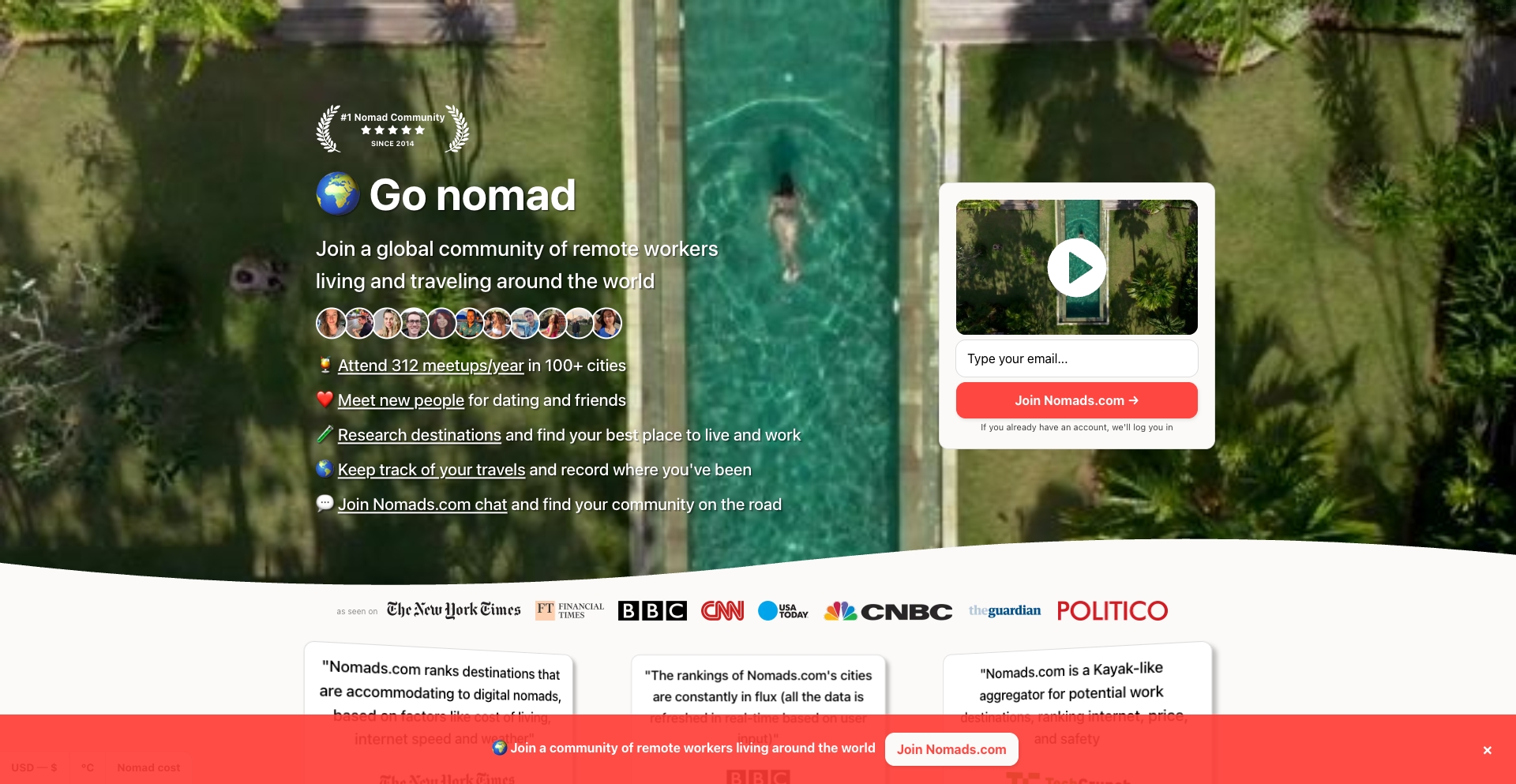
Nomadlist created pages for digital nomads comparing cost of living across cities worldwide. Each page includes rent prices, coworking costs, internet speed, safety scores, and quality-of-life ratings.
Why it works: The data is specific, structured, and hard to find elsewhere. Nomadlist aggregates information from multiple sources and presents it in a standardized format that makes comparison easy. The structured data also helps with rich snippets in search results.
Takeaway: Proprietary or aggregated datasets create defensible programmatic content. The harder it is for competitors to replicate your data, the more durable your rankings.
5. G2: Comparison Pages
Pattern: [Product A] vs [Product B]
Estimated page count: 100,000+
G2 built an enormous library of software comparison pages. Search for any two competing products -- "Salesforce vs HubSpot," "Asana vs Monday," "Zoom vs Teams" -- and G2 typically ranks in the top three results.
Why it works: Comparison queries signal strong purchase intent. G2 fills each page with side-by-side feature comparisons, pricing data, user ratings, and verified reviews. The template is consistent, but the data is unique per page.
If you want to replicate this pattern, a comparison matrix generator can help you build the data structure needed for comparison pages at scale.
6. Wise (formerly TransferWise): Currency Converter Pages
Pattern: [Currency A] to [Currency B]
Estimated page count: 10,000+
Wise created landing pages for every currency pair: "USD to EUR," "GBP to JPY," "AUD to CAD." Each page includes live exchange rates, historical charts, fee comparisons, and a direct link to transfer money.
Why it works: The pages serve an immediate utility (checking exchange rates) while naturally funneling users into Wise's product. Each page is data-rich with real-time information, which keeps content fresh and useful.
Takeaway: Calculator and converter pages combine utility with lead generation. If your product involves any kind of numerical lookup, this pattern could work for you.
7. Canva: Template Gallery Pages
Pattern: [Document type] template
Estimated page count: 50,000+
Canva created individual landing pages for every template type imaginable: "invoice template," "resume template," "Instagram story template," "business card template." Each page shows preview images and lets users start editing immediately.
Why it works: Template searches have clear intent -- the person wants to create something right now. Canva's pages let users go from search to design in one click, reducing friction to nearly zero.
Takeaway: If your product has a template or gallery component, each individual item can become its own landing page targeting a specific search query.
8. HubSpot: Statistics Pages
Pattern: [Topic] statistics [Year]
Estimated page count: 500+
HubSpot created roundup pages for statistics on dozens of marketing topics: "email marketing statistics 2026," "social media statistics," "content marketing statistics." These pages aggregate data from multiple research sources with proper citations.
Why it works: Journalists, bloggers, and marketers constantly search for statistics to cite in their content. By aggregating stats in one place, HubSpot earns backlinks every time someone references the page -- which further strengthens rankings.
Takeaway: Statistics pages are a programmatic pattern that generates backlinks organically. They require regular data updates but provide compounding SEO value over time.
9. Zillow: Neighborhood Pages
Pattern: [Neighborhood] homes for sale / Living in [Neighborhood]
Estimated page count: 100,000+
Zillow created pages for every neighborhood in the United States, each containing median home prices, school ratings, crime data, walkability scores, and active listings.
Why it works: Home buyers search by specific neighborhoods, not just cities. Zillow's granular location data means they capture traffic at every geographic level: state, city, neighborhood, and even street. The pages combine structured data with active listings to stay current.
Takeaway: Going one level deeper in your geographic or categorical hierarchy can multiply your page count by 10-50x. If competitors target cities, target neighborhoods. If they target categories, target subcategories.
10. BambooHR: Salary Guide Pages
Pattern: [Job title] salary in [Location]
Estimated page count: 5,000+
BambooHR created salary guide pages for various job titles across different cities and states. Each page includes average salary data, salary ranges by experience level, cost-of-living adjustments, and benefits information.
Why it works: Salary searches are high-volume and high-intent. Job seekers, hiring managers, and HR professionals all search for compensation data regularly. BambooHR uses this traffic to funnel visitors into their HR software platform.
Takeaway: Two-variable patterns (job title x location) create a natural matrix of pages. The more variables in your pattern, the more pages you can generate.
Patterns Summary
| Company | Pattern Type | Variables | Est. Pages | Primary Value |
|---|---|---|---|---|
| Zapier | Integration | App A x App B | 25,000+ | Workflow templates |
| Yelp | Location | Business x Location | Millions | Reviews + ratings |
| Tripadvisor | Location | Attraction x City | Millions | User reviews |
| Nomadlist | Data | Metric x City | 1,000+ | Aggregated data |
| G2 | Comparison | Product A x Product B | 100,000+ | Feature comparison |
| Wise | Utility | Currency A x Currency B | 10,000+ | Live exchange rates |
| Canva | Template | Document type | 50,000+ | Editable templates |
| HubSpot | Statistics | Topic x Year | 500+ | Curated data |
| Zillow | Location | Property x Neighborhood | 100,000+ | Listings + data |
| BambooHR | Data | Job title x Location | 5,000+ | Salary benchmarks |
How to Apply These Patterns to Your Business
The examples above share a few common traits:
- Each page serves a specific search query. No page exists just to exist -- every one matches real user intent.
- Each page contains unique data. Templates provide structure, but the data inside varies meaningfully between pages.
- Each page funnels toward a product action. The content is genuinely helpful, but it also guides users toward signing up, purchasing, or engaging further.
To find which pattern fits your business, start by analyzing your existing keyword data with a keyword pattern detector. Look for queries that follow a repeatable structure -- location modifiers, product names, industry terms, or comparison phrases.
Once you've identified your pattern, you can build the full pipeline using a programmatic SEO platform: define your template, build or enrich your dataset, generate content at scale, and publish.
If you're looking for a deeper walkthrough of how to build a full strategy around these patterns, read our guide on building a programmatic SEO strategy.
Getting Started
You don't need to be the size of Zapier or Yelp to make programmatic SEO work. Even a few hundred well-targeted pages can drive significant organic traffic for a small or mid-size business. The key is finding the right pattern for your market and executing it with quality data and thoughtful templates.
Ready to find your pattern? Try the programmatic SEO wizard to identify your best opportunities, or check out our pricing to start building your programmatic content engine today.