Content briefs are the secret weapon of high-performing content teams. They transform vague ideas into actionable writing plans, ensuring every piece of content is strategically aligned and optimized from the start. But creating detailed briefs for every article takes time—time most teams don't have.
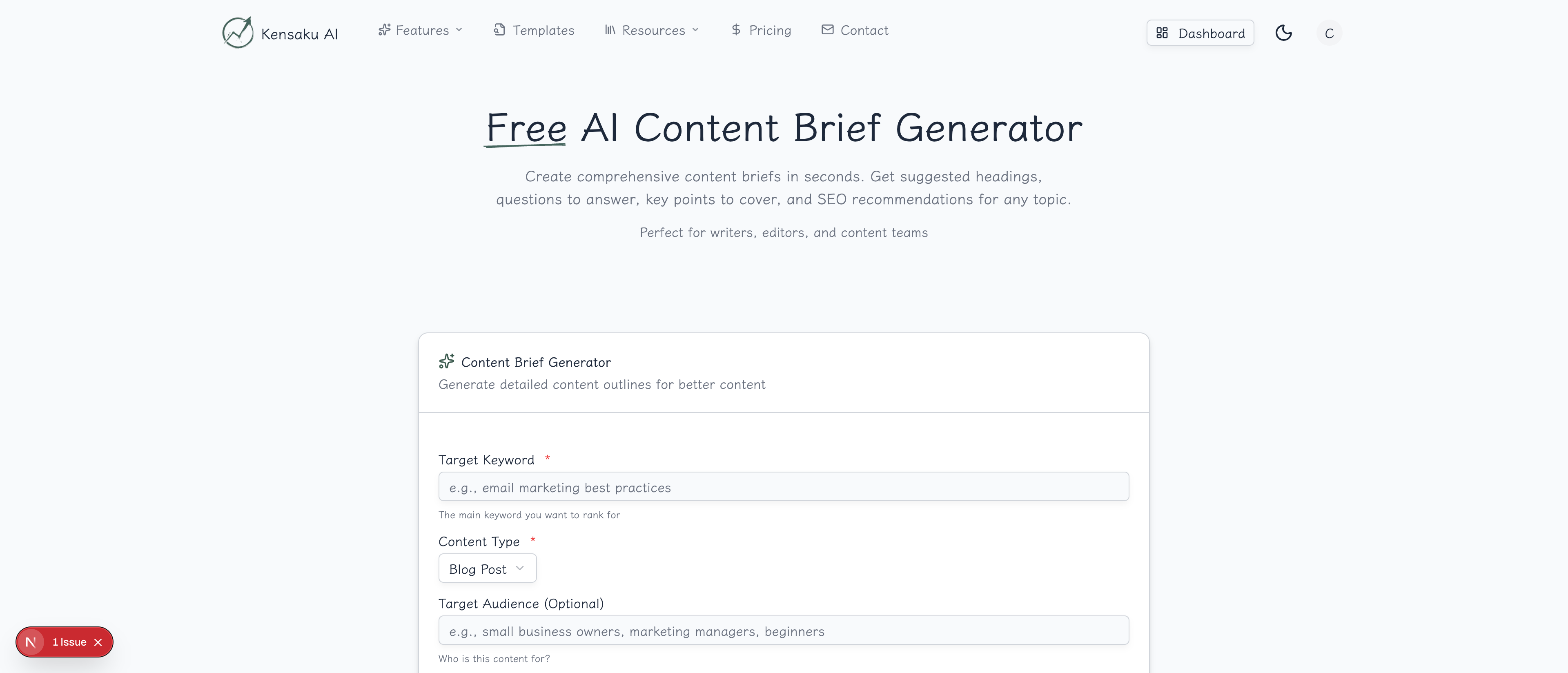
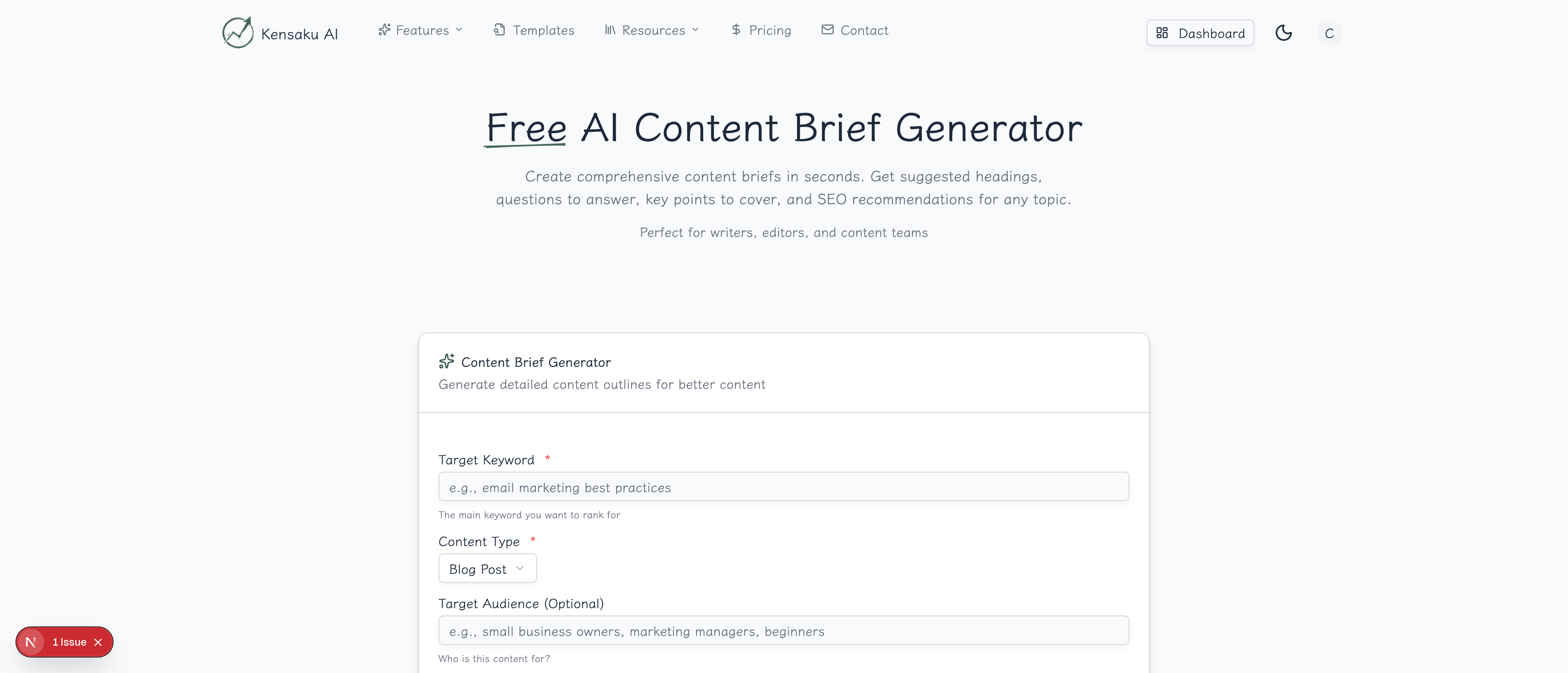
Our free AI Content Brief Generator creates comprehensive content outlines in seconds, complete with suggested headings, questions to answer, key points, and SEO recommendations.
What is a Content Brief?
A content brief is a strategic document that outlines everything a writer needs to create high-performing content. Think of it as a blueprint that guides the writing process from start to finish.
A well-crafted content brief includes:
- Target keyword and search intent: What users are looking for
- Suggested headings (H2s, H3s): Logical structure for the content
- Questions to answer: Based on "People Also Ask" and user queries
- Key points to cover: Essential topics competitors are addressing
- SEO recommendations: Word count, keywords to include, internal linking
- Tone and audience: How to write for your target reader
Why Content Briefs Matter
Consistency at Scale
When multiple writers work on your content, briefs ensure everyone follows the same standards. The result: consistent quality across all your content.
Faster Writing
Writers spend less time researching and more time writing when they have a clear roadmap. Briefs can cut writing time by 30-50%.
Better SEO Outcomes
Briefs baked with SEO best practices mean every piece of content is optimized from the start—not retrofitted afterward.
Reduced Revisions
Clear expectations upfront mean fewer rounds of revisions. Writers know exactly what's needed, and editors spend less time sending work back.
How the Generator Works
Step 1: Enter Your Target Keyword
Type the main keyword you want to rank for. This guides the entire brief structure.
Effective keywords:
- "programmatic SEO for e-commerce"
- "best project management tools for remote teams"
- "how to start a dropshipping business"
Less effective:
- "SEO" (too broad)
- "tools" (not specific enough)
Step 2: Select Content Type
Choose the format that matches your content goals:
| Content Type | Best For |
|---|---|
| Blog Post | Educational, informational content |
| Ultimate Guide | Comprehensive, pillar content |
| How-To Tutorial | Step-by-step instructions |
| Comparison | Product/service comparisons |
| Listicle | Curated lists and roundups |
| Case Study | Results-focused stories |
Step 3: Define Your Audience
Specify who you're writing for to get more targeted recommendations:
- "E-commerce store owners"
- "Marketing managers at SaaS companies"
- "Beginner freelance writers"
- "Enterprise IT decision-makers"
The more specific your audience, the more tailored your brief.
Step 4: Set Word Count
Choose your target length based on content goals:
- Short (500-800 words): Quick answers, news updates
- Medium (1000-1500 words): Standard blog posts
- Long (1500-2500 words): In-depth guides
- Comprehensive (2500+ words): Pillar content, ultimate guides
Step 5: Generate and Customize
Click "Generate Brief" and receive your complete outline. Review, customize, and share with your writing team.
What's Included in Generated Briefs
Suggested Headings
Get a complete outline with H2 and H3 structure based on top-ranking content:
H2: What is Programmatic SEO?
  H3: Definition and Core Concepts
  H3: How It Differs from Traditional SEO

H2: Benefits for E-commerce Stores
  H3: Scale Product Pages
  H3: Capture Long-Tail Traffic
  H3: Automate Content Creation

H2: Implementation Steps
  H3: Identify Patterns
  H3: Build Templates
  H3: Generate at Scale
Questions to Answer
Address what users are actually asking:
- "Is programmatic SEO good for small stores?"
- "How much traffic can programmatic SEO generate?"
- "What tools do I need for programmatic SEO?"
- "How long does it take to see results?"
Key Points to Cover
Essential topics for comprehensiveness:
- Definition and working mechanism
- Benefits vs. manual content creation
- Real-world e-commerce examples
- Common challenges and solutions
- Tools and platforms comparison
- ROI and success metrics
SEO Guidelines
Specific optimization recommendations:
- Target word count: 1200-1500 words
- Primary keyword density: 1-2%
- Include variations: "pSEO," "automated SEO"
- Internal linking: Link to related guides
- External sources: Industry statistics, case studies
Using Briefs with Your Team
For Content Managers
- Generate briefs for your content calendar
- Assign briefs to writers with deadlines
- Use consistent brief format across all assignments
- Track completion and quality scores
For Writers
- Review the brief before starting
- Follow the heading structure as a guide
- Address all required questions
- Check off key points as you cover them
- Meet word count and SEO guidelines
For Editors
- Compare submitted content against the brief
- Verify all sections are addressed
- Check that SEO guidelines are followed
- Provide feedback based on brief requirements
Content Brief Best Practices
Be Specific About Intent
Don't just list keywords—explain what the reader wants to achieve:
Vague: "Write about programmatic SEO" Specific: "Help e-commerce store owners understand how programmatic SEO can scale their product pages to capture long-tail traffic"
Include Examples
Show writers what you're looking for:
- Links to competitor content that ranks well
- Examples of the tone you want
- Sample headlines that work
- Screenshots or visuals to include
Set Clear Constraints
Define what NOT to include:
- Topics to avoid
- Competitors not to mention
- Claims that need verification
- Outdated information to exclude
Allow Creative Freedom
Briefs guide—they don't dictate. Leave room for writers to add their expertise and unique insights.
Scaling Briefs for Programmatic SEO
Template-Based Briefs
For programmatic SEO content, create brief templates with variables:
Title Template: [Product Category] Guide for [Industry]

Key Sections:
- What is [product category]?
- Why [industry] needs [product category]
- Top [product category] options for [industry]
- How to choose the right [product category]
- Implementation checklist

Audience: [Industry] professionals
Word Count: 1000-1200 words
Batch Brief Generation
When creating hundreds of similar pages:
- Generate one master brief
- Identify variable sections
- Create data sources for variables
- Use automation to populate briefs at scale
Quality Control at Scale
Even with automation, maintain quality:
- Random sampling of generated briefs
- Clear escalation path for edge cases
- Regular template updates based on performance
Common Brief Mistakes
Too Much Detail
Problem: Briefs so detailed they're as long as the article itself. Solution: Focus on structure and key requirements, not the actual content.
Ignoring Search Intent
Problem: Brief doesn't match what users actually want. Solution: Research SERPs before creating briefs. Understand what's ranking and why.
Unrealistic Expectations
Problem: Asking for 3,000 words on a topic that doesn't need it. Solution: Let the topic dictate length. Brief for what's actually needed.
No Success Criteria
Problem: No way to measure if the brief was executed well. Solution: Include specific, measurable criteria for success.
Measuring Brief Effectiveness
Track These Metrics
- Time to completion: How long from brief to published?
- Revision rounds: How many edits needed?
- SEO performance: Rankings, traffic, engagement
- Writer satisfaction: Are briefs helpful or frustrating?
Iterate Based on Data
- Which brief elements correlate with better content?
- What information do writers consistently need that's missing?
- Which sections are ignored or deemed unhelpful?
Integration with Content Workflow
Build briefs into your content pipeline:
- Keyword Research Tool → Find topics worth writing about
- Content Brief Generator → Create detailed writing plans
- Writing → Execute against the brief
- Editing → Verify brief requirements met
- Publishing → Launch optimized content
- Analysis → Measure and improve briefs
Get Started
Ready to streamline your content creation process? Try our free AI Content Brief Generator now.
For teams implementing programmatic SEO workflows, explore our full platform with bulk brief generation, team collaboration features, and direct publishing to WordPress.